Security Verification and Offensive-Defensive Practice
Prevention First: Analysis of Gartner's "Emerging Tech Impact Radar: Preemptive Cybersecurity" Report

In today's digital age, cyber threats are evolving at an unprecedented pace and complexity. According to Gartner's latest "Emerging Tech Impact Radar: Preemptive Cybersecurity" report, with hackers increasingly leveraging Generative AI (GenAI), traditional "detect and respond" strategies are no longer sufficient to address modern cybersecurity challenges. This article will deeply analyze the core findings of this report and explore the crucial roles of Threat Exposure Management and Cybersecurity Validation in preemptive strategies.

01 Core Insights of Gartner Report
Strategic Planning Assumptions
Gartner's report puts forward three key strategic planning assumptions:
By 2028, 75% of security solutions will leverage at least one preemptive cybersecurity technology to counteract multimodal attack vectors, up from less than 10% today.
By 2028, 30% of preventive cybersecurity and threat detection solutions will leverage automated deception capabilities, up from less than 10% today.
By 2030, 60% of risk management tasks and remediation measures will use intelligent automation, up from 10% today.
These assumptions clearly demonstrate that the cybersecurity industry is undergoing a paradigm shift from reactive response to proactive prevention.
Three Core Themes
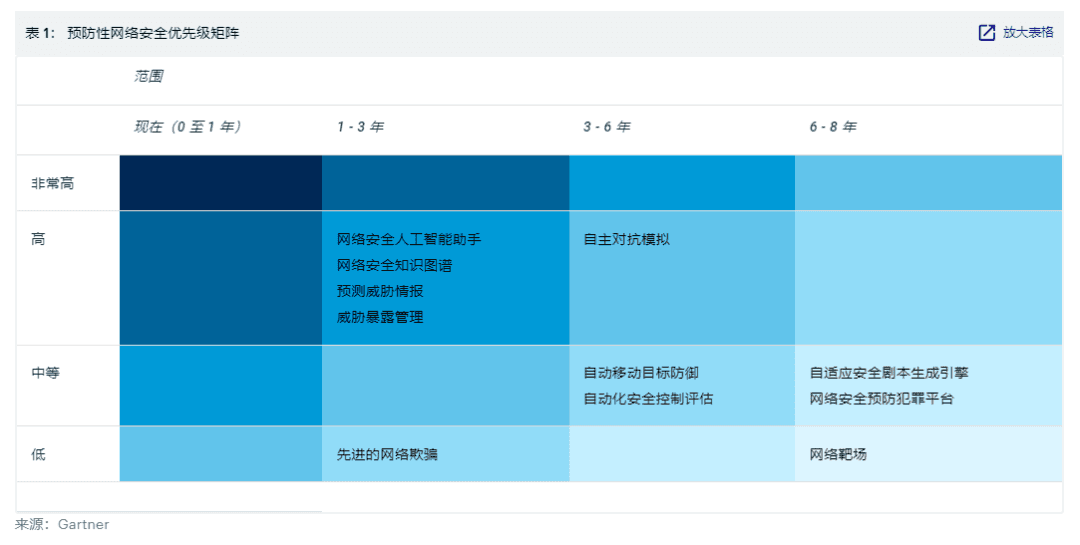
The 11 emerging technologies and trends covered in the report revolve around three core themes:
Predictive Analytics
In the face of GenAI-driven cyberattacks, predicting and preventing potential future attacks has become an urgent priority. This capability is based on a comprehensive understanding of the threat landscape, leveraging technologies such as cybersecurity knowledge graphs, predictive threat intelligence, and cybersecurity crime prevention platforms, allowing organizations to identify and mitigate potential risks before an attack occurs.
Automated Exposure Management
Technologies supporting threat exposure management aim to proactively identify, assess, and resolve potential vulnerabilities and exposures in an organization's environment to prevent exploitation. Automation and AI significantly increase the speed and efficiency of these capabilities, thereby shrinking the attack window.
Preventive Mitigation
Technologies like Automated Moving Target Defense (AMTD) and advanced cyber deception can effectively distort attackers' line of sight to their targets, forcing attackers to waste time and resources and diverting their attention away from real targets.
02 Strategic Importance of Threat Exposure Management
The Gartner report's analysis of Threat Exposure Management is of particular value. The report defines it as "an emerging category of technology supporting the growing trend toward proactive cybersecurity and preemptive cyber defense, involving the continuous identification, assessment, and mitigation of vulnerabilities, misconfigurations, and other unpatchable security flaws to minimize an organization's exposure to potential cyber threats."
Key Characteristics of Threat Exposure Management
According to the report, threat exposure management has several key characteristics:
1. Integrated Evolutionary Approach: It integrates multiple previously fragmented capabilities, enabling organizations to shift focus from traditional patchable vulnerabilities to security weaknesses and unpatchable exposures.
2. AI-Driven Optimization: Product leaders are leveraging AI to improve discovery and aggregation methods, prioritization, and prescriptive remediation.
3. Attack Surface Mapping: Transitioning through the use of knowledge graph databases to better understand the relationships between assets and threats and to analyze potential attack paths.
Market Outlook for Threat Exposure Management
Gartner predicts that threat exposure management is one to three years away from early mainstream adoption and is rated as "high quality," meaning it will have a broad impact across various industries. The report notes that an expanding attack surface increases potential entry points that attackers can breach, prompting organizations to treat cybersecurity threats as business risks, aligning business objectives with security investments.
Industries such as healthcare, finance, retail, technology, and critical infrastructure have a particular need to adopt proactive approaches to manage and mitigate exposure risks, highlighting the criticality of threat exposure management as an essential component of a comprehensive cyber defense strategy.
03 Synergy Between Cybersecurity Validation and Threat Exposure Management
As a cybersecurity validation company, we recognize the strong synergy with threat exposure management. The report's analysis on Autonomous Adversarial Emulation (AAE) is closely linked to threat exposure management, and the combination of both can provide a comprehensive preemptive security framework.
Synergistic Value Points
1. Comprehensive Attack Surface Assessment: Threat exposure management provides continuous visibility of the attack surface, while security validation verifies the actual exploitability of these exposure points through real simulated attacks.
2. Prioritized Validation: Threat exposure management identifies and prioritizes potential risks, while security validation can verify the real impact of these risks, thereby optimizing resource allocation.
3. Closed-Loop Feedback: Validation results can be fed back into the exposure management process, enabling continuous improvement and more accurate risk assessments.
4. Real-Time Adaptation: Both technologies utilize AI and automation to achieve real-time adaptation and response, forming a dynamic defense mechanism.
Special Value of Autonomous Adversarial Emulation
The report defines AAE as an emerging security technology that "combines predictive machine learning models with historical and simulated hacking behaviors to simulate and emulate cyberattacks in real time." Its special value lies in:
1. Validating Exposure Points: AAE can validate exposure points identified by threat exposure management, showing possible vulnerabilities and providing comprehensive guidance for preemptive attack resilience improvement.
2. Application of Generative Models: Utilizing generative models to create customized attack simulations tailored to an organization's unique environment, bridging the gaps in traditional validation methods.
3. Continuous Validation: Providing a continuous validation process, rather than traditional point-in-time assessments, aligning with the continuous nature of threat exposure management.
04 Implementing Integration Strategies for Threat Exposure Management and Security Validation
Based on Gartner's report, we suggest organizations consider the following integration strategies:
1. Establish a Comprehensive Attack Surface Management Foundation
Establish continuous attack surface visibility through threat exposure management technology, combining asset discovery, vulnerability assessment, and configuration analysis to create a comprehensive map of the organization's security posture.
Implement Validation-Driven Exposure Prioritization
Utilize security validation technology to conduct actual testing on identified exposure points, validating their exploitability and potential impact, thereby achieving more precise prioritization and resource allocation.
Develop Adaptive Mitigation Strategies
Based on validation results and exposure analysis, develop and implement adaptive mitigation strategies, including technical controls and process improvements, to form a dynamic detection and defense mechanism.
Establish a Closed-Loop Feedback System
Create a closed-loop feedback system from exposure identification to validation, mitigation, and re-evaluation, ensuring continuous improvement and evolution of the security posture.
Leverage AI to Enhance Analytical Capabilities
Fully leverage AI and machine learning in the exposure management and validation process to improve predictive accuracy, analysis efficiency, and response speed.
05 Concrete Recommendations for Security Teams
As a company focused on security validation and threat exposure management, Security Validation further suggests:
1. Integrate Data Flows: Ensure seamless data flow between threat exposure management and security validation systems, creating a unified view of risk.
2. Adopt a Context-Aware Approach: Consider the business context and asset value, translating technical risks into business risks to enhance decision-making support.
3. Establish Validation-Driven Metrics: Develop security performance metrics based on validation, rather than relying solely on traditional compliance or coverage metrics.
4. Foster Cross-Functional Expertise: Build teams proficient in both exposure management and security validation to break down traditional security function silos.
5. Plan for AI Automation: Implement AI automation for repetitive assessment and validation tasks, freeing up security professionals' time for higher-value activities.
Gartner's report clearly demonstrates that the cybersecurity landscape is rapidly shifting from reactive response to proactive prevention. In this shift, the combination of threat exposure management and cybersecurity validation offers a powerful preemptive security framework, enabling organizations to identify, validate, and mitigate potential risks before threats cause actual damage.
As a company focused on these two key areas, we are committed to integrating the preemptive technologies highlighted in the Gartner report into our solutions, providing customers with comprehensive, intelligent, and forward-looking security validation and assessment. By integrating threat exposure management with advanced security validation capabilities, we help organizations build a stronger, more resilient security posture to counter the evolving cyber threat landscape.
In today's world of increasingly complex GenAI-driven threats, a preemptive security strategy has become imperative. The tight integration of threat exposure management and security validation is the key path to achieving this strategic shift.
.


