Security Verification and Offensive-Defensive Practice
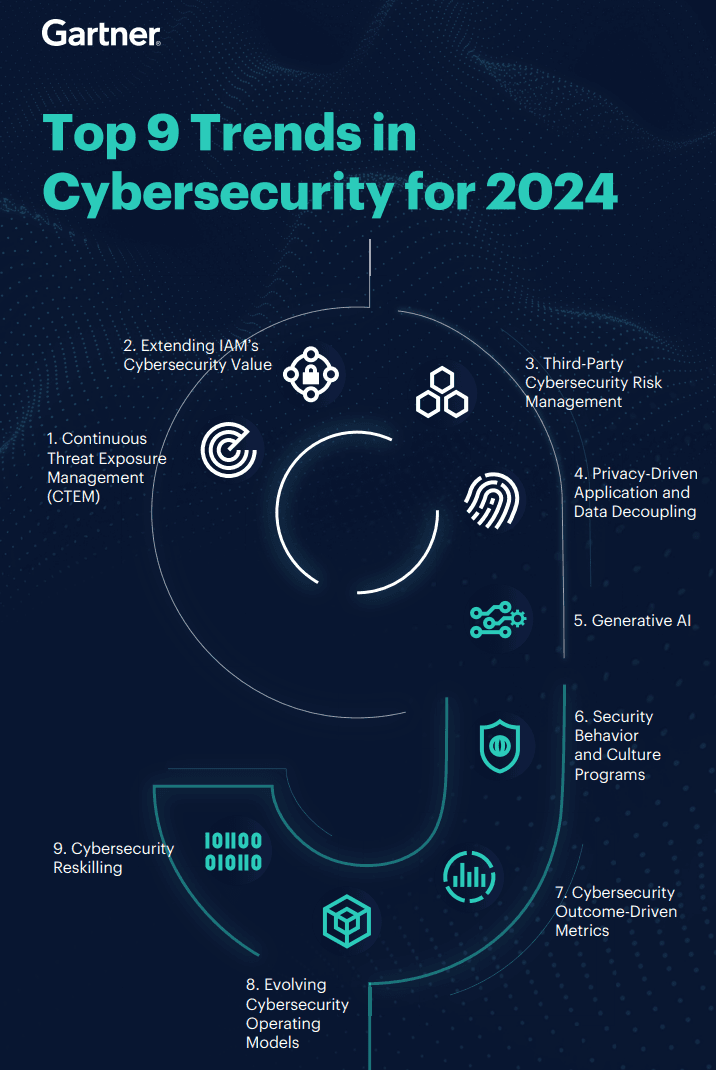
CTEM tops the list! Gartner announces top 9 cybersecurity trends for 2024

Recently, Gartner, a leading research and advisory company, released the top nine cybersecurity trends for 2024, which include the application of new technologies, the integration of threat intelligence, and the importance of validation technology. Among these trends, CTEM (Continuous Threat Exposure Management) has risen from 4th place last year to the top spot this year, drawing significant attention to its importance.
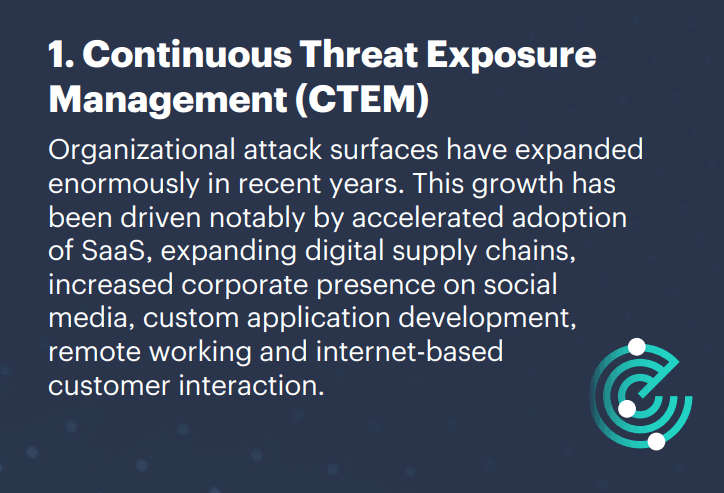
▌What is CTEM?
CTEM (Continuous Threat Exposure Management) is a continuous cybersecurity management methodology designed to assess and respond to various threats faced by network systems in real-time. According to Gartner's latest report, global cyberattacks have been increasing at a rate of 10% annually since 2022, and this number is expected to continue rising in 2024. This has made the corporate demand for real-time monitoring and response to cyber threats increasingly urgent, thereby driving the rapid growth of the CTEM market.
According to data from IDC, global spending on cybersecurity reached approximately USD 130 billion in 2023, with about 20% of the budget allocated to threat detection and response. This trend indicates that corporate investment in cybersecurity will increasingly focus on real-time and continuous threat management, thus driving the booming development of the CTEM market.
Gartner's definition and interpretation of CTEM can be summarised into the following key points:
Real-time and Continuous: CTEM emphasises real-time and continuous management of network system security. Enterprises cannot solely rely on one-off security assessments and management; instead, they need to establish continuous threat monitoring and response mechanisms.
Comprehensive and Holistic: CTEM stresses that enterprises need to comprehensively consider all types of cybersecurity threats they face, rather than being limited to specific types of attacks or vulnerabilities. This requires enterprises to establish a comprehensive threat intelligence collection and analysis mechanism, as well as integrated security measures and strategies.
Data-Driven and Intelligent: CTEM relies on data-driven methods and intelligent technologies to help enterprises identify and respond to various threats in a timely manner. This includes leveraging technologies such as artificial intelligence and machine learning to analyze vast amounts of security data, discover potential threats, and respond promptly.
Business Risk-Oriented: CTEM needs to integrate security management with business risk management to ensure the effectiveness and compliance of security measures. This means enterprises must incorporate security management into their overall business strategy and risk management framework to ensure alignment and synergy between security measures and business objectives.
▌The 5 Key Steps of CTEM
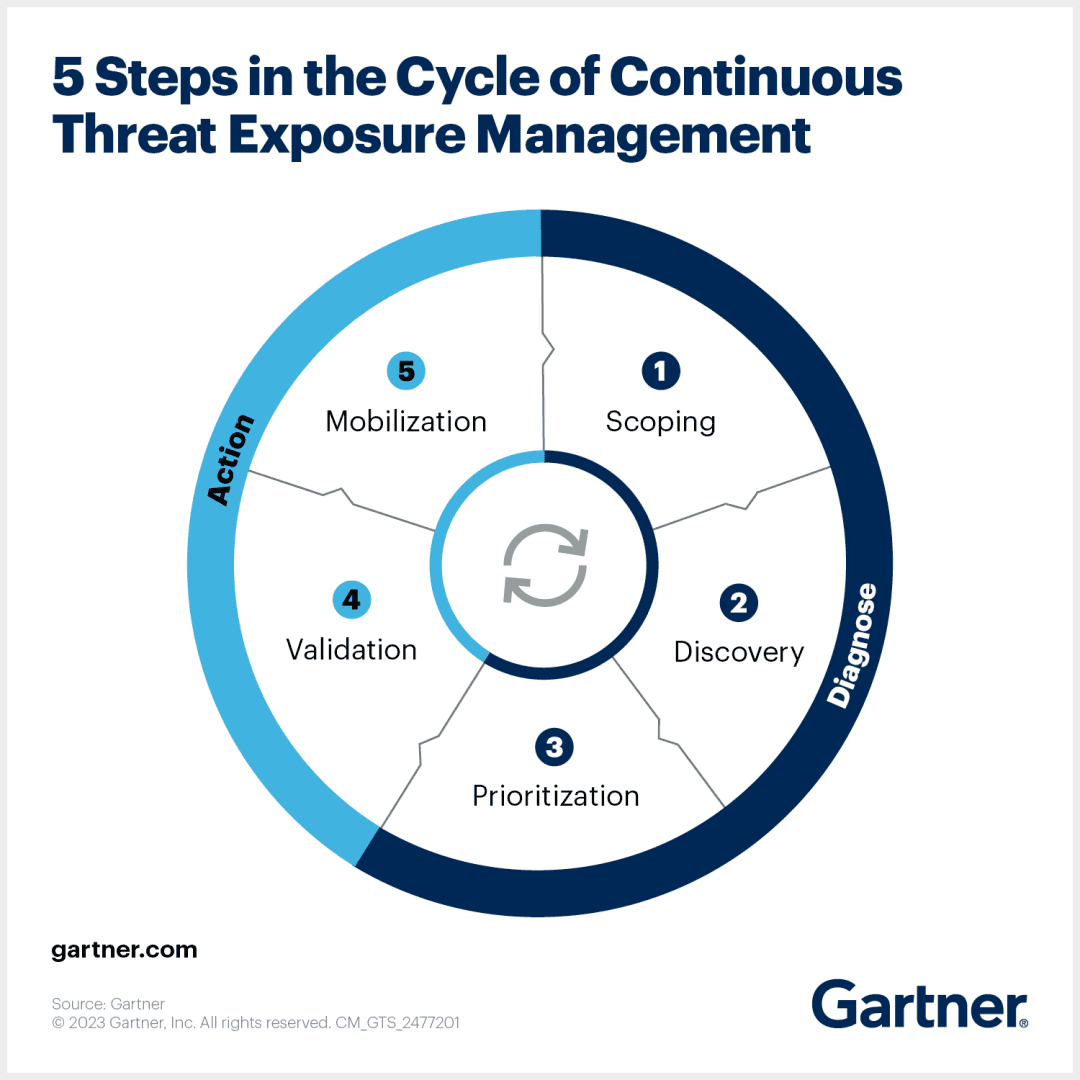
Gartner provides the basic framework for CTEM, dividing it into five steps to help enterprises establish a continuous threat management mechanism to assess and manage threats faced by network systems in real-time, thereby improving cybersecurity and response capabilities.
Scoping:
In this phase, enterprises need to define the scope and objectives of CTEM. This includes determining the scope of network systems to be monitored and assessed, as well as clarifying the implementation goals and expected outcomes of CTEM.Discovery:
In the discovery phase, enterprises need to collect threat intelligence from various sources and conduct a comprehensive threat assessment of their network systems. This includes gathering public vulnerability reports, hacker activity intelligence, victim threat intelligence, intelligence from industry information-sharing organizations, and analyzing threat intelligence to identify potential threats and vulnerabilities.Prioritization:
In the prioritization phase, enterprises need to prioritize the identified threats and determine their potential impact and risk level to the enterprise's network systems. Prioritization helps enterprises identify which threats to address first, ensuring effective resource allocation and risk management.Validation:
In the validation phase, enterprises need to validate the identified threats to ensure the effectiveness and timeliness of security measures. This includes validating the effectiveness of security measures such as vulnerability remediation and security policy updates to ensure these measures can effectively counter known threats.Mobilization:
In the mobilization phase, enterprises need to formulate and implement corresponding response measures to mitigate or eliminate the impact caused by threats. This includes blocking attack sources, remediating vulnerabilities, and updating security policies to ensure the security and stability of network systems.
▌Validation: What Exactly is Being Validated?
Validation plays a crucial role in CTEM. It involves the continuous assessment and validation of security measures in the IT environment to ensure their effectiveness and timeliness.
Vulnerability Validation: Continuous validation helps enterprises identify and validate the mitigation status of known vulnerabilities in a timely manner. According to the latest research data, most data breaches are caused by known but unpatched vulnerabilities. Therefore, validating mitigation measures (patching or perimeter defense) for known vulnerabilities is critical to prevent hackers from exploiting them.
New Threat Validation: As cyber threats constantly evolve, enterprises must validate their security defense systems' ability to defend against new threats in a timely manner. Continuous validation helps enterprises identify and respond to new threats, enabling them to adjust security policies and measures promptly to safeguard the IT environment.
Validation of Security Measure Effectiveness: Enterprises invest significant resources into implementing various security measures, such as firewalls and intrusion detection systems. However, the effectiveness of these security measures must be continuously validated. Through continuous validation, enterprises can assess the actual performance of security measures and adjust and optimize them in a timely manner to improve or maintain a high level of network security and defense capabilities.
Compliance Validation: Many industries face strict compliance requirements, such as finance, healthcare, energy, and utilities. Continuous validation helps enterprises ensure that their network systems comply with relevant standards and regulatory requirements, thereby avoiding potential fines and legal liabilities.
Automated Validation: With technological advancements, automated validation technologies based on artificial intelligence and machine learning are constantly developing. These technologies can help enterprises achieve faster and more accurate validation, thereby improving validation efficiency and reducing costs.
▌Sixun Validation: Covering the Five Key Steps of CTEM
The Sixun Security Metrics Validation Platform is rooted in "Validation" but actually covers the entire life cycle of CTEM. Our goal is to help customers achieve continuous threat management, assisting them throughout the entire process—from scoping, threat intelligence collection and analysis, prioritization, to executing validation actions, and taking mitigation, remediation, and optimization measures based on validation results.
Sixun Validation provides you with first-hand victim threat intelligence to empower corporate security defenses. Through our platform, enterprises can acquire the latest threat intelligence and attack techniques, allowing them to quickly validate the effectiveness of their security defenses, take targeted improvement measures promptly, and continuously strengthen their cybersecurity protection capabilities. The Sixun Security Lab continuously monitors and analyzes threat intelligence from various sources globally, ensuring that customers' understanding and defense of hacker Tactics, Techniques, and Procedures (TTPs) remain at the forefront of the industry.


