Software Supply Chain Security
Cl0p targets Windchill, making R&D data the latest ransomware target

When many enterprises talk about ransomware attacks, their first reaction is still servers being encrypted, business suspension, and files being unable to open. The recent attacks targeting PTC Windchill and FlexPLM serve as a reminder to look at it from a different perspective: attackers may not be in a hurry to lock the system at all; they care more about what is stored inside the system.
Windchill and FlexPLM belong to Product Lifecycle Management (PLM) platforms, where R&D, engineering, manufacturing, quality, and supply chain teams all leave data. Product structures, design drawings, configuration files, and supplier collaboration information often follow from product initiation all the way through to production and delivery.
On July 24, BleepingComputer reported that the Cl0p ransomware group is targeting Windchill and FlexPLM instances exposed to the public network. Attackers exploit CVE-2026-12569 to execute code and deploy JSP WebShells to further steal product data of affected enterprises.
Event Dossier
Target of Attack: Externally exposed PTC Windchill and FlexPLM instances.
Vulnerability Exploited: CVE-2026-12569, PTC has released patches and remediation advisories.
Attack Action: Unauthorized remote code execution, deployment of JSP WebShell, and attempts to read and exfiltrate product data.
Event Characteristics: The focus of attack shifted from "paralyzing systems" to "taking away high-value data first, then conducting extortion."
01
Why Windchill
Systems like Windchill may not be opened by employees every day, but it is highly likely to hold the core collection of an enterprise's data. The R&D department maintains the product structure in it, engineering teams upload drawings and process documents, and supplier collaborations also leave interfaces and shared records.
When a general file server is hit, enterprises worry about file loss; when an R&D platform is hit, the worries also include the exposure of product design, manufacturing processes, and supplier relationships altogether. For industries such as automotive, aerospace, equipment manufacturing, and medical devices, once this information is leaked, the impact can last for a long time.
For attackers to target this type of platform, they do not need to understand all the business operations of the enterprise first. An entry point exposed to the public network, a server that hasn't been patched in time, combined with the high-value data of the platform itself, is enough to become an attack path worth investing in.
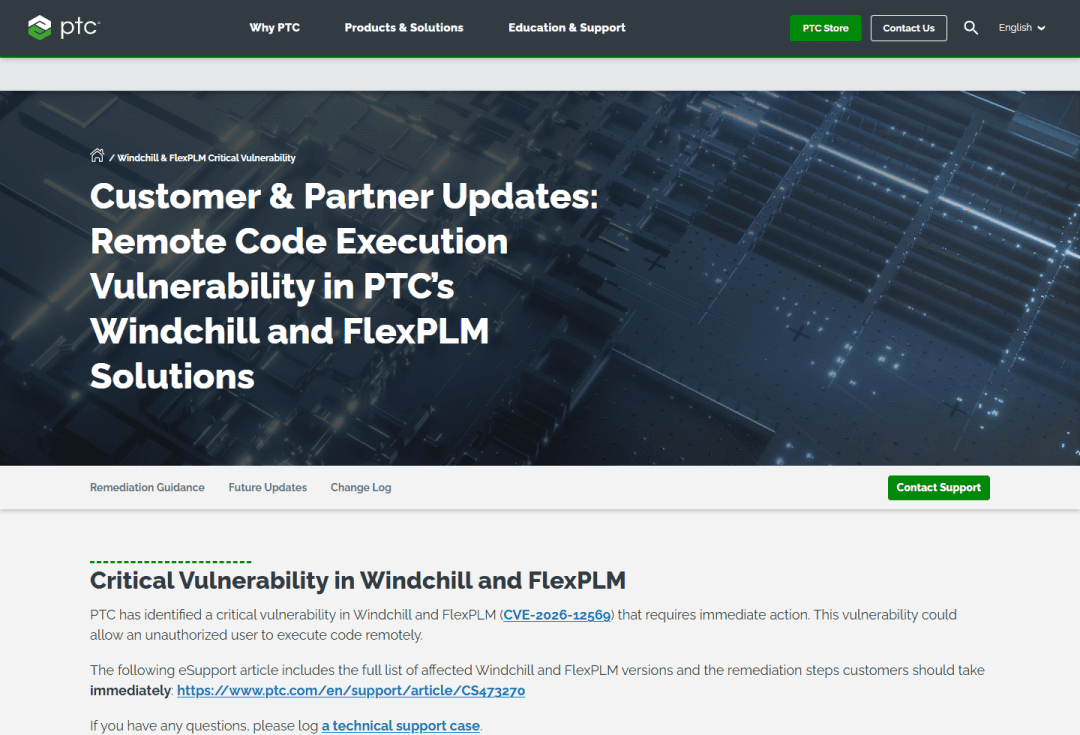
Figure | PTC Security Bulletin on Windchill and FlexPLM Image Source: PTC
This type of attack usually progresses along this path

The system can still be opened, which does not mean that data has not been taken away. Data exfiltration attacks often try to keep the noise as low as possible.
02
What enterprises are most likely to miss are the traces after the attack occurs
After a vulnerability announcement is released, the security team usually confirms the version first, pushes for patches, and coordinates business maintenance windows. None of these actions can be skipped. However, if the platform has already been accessed by attackers, simply upgrading the version does not mean the previous risks have disappeared.
During investigations, one cannot just focus on version numbers. Vulnerability-related requests, abnormal JSP files, WebShell execution commands, suspicious account logins, and batch reading and packaging behaviors of product data all need to be cross-checked on the same timeline.
These clues are usually scattered across Web access logs, host files, process logs, database audits, and egress traffic. Looking at any single place, it might just seem like normal operations; only after linking them together is there a chance to judge exactly how far the attacker has progressed.
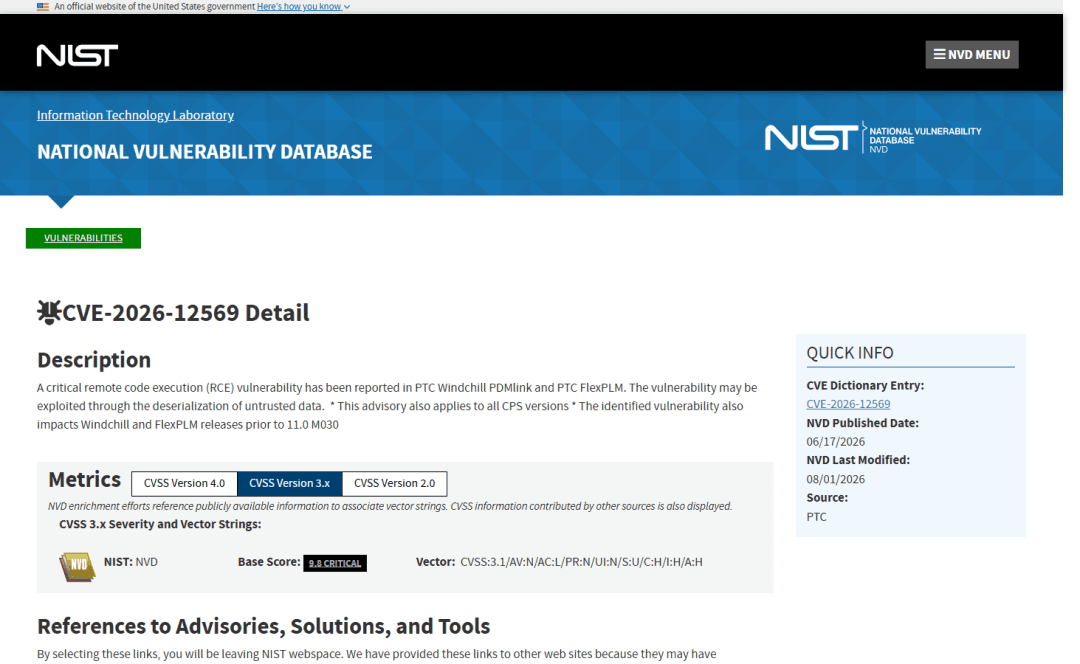
Figure | CVE-2026-12569 Vulnerability Record Image Source: NVD
R&D platforms are often connected to identity systems, file storage, supplier accounts, and other internal services. After an anomaly occurs in Windchill or FlexPLM, the scope of investigation cannot just stop at the platform itself; related accounts, interfaces, and data flows need to be cross-checked together.
03
Beyond patches, what attackers leave behind must also be dealt with
PTC released patches in June and reminded customers to look out for relevant indicators of compromise. Security agencies suggest that enterprises suspecting they are affected should first isolate the servers, collect forensic materials, then rotate exposed credentials, and restore services after confirming the environment is clean.
This sequence does not look complicated, but it is easily disrupted by the rhythm of business recovery during on-site execution. Once the system restarts, some temporary files and process information may disappear; modifying configurations without leaving evidence only leaves guessing as the only way to determine what the attacker did later on.
Even more troublesome is that R&D platforms are often not isolated systems. They may connect to identity systems, file storage, supplier accounts, and other internal services. After an entry point is breached, the scope of what truly needs to be inventoried may have already exceeded Windchill itself.
04
After checking for vulnerabilities, you must check whether data has gone out the door
Check Entry Points: Whether all public-facing Windchill and FlexPLM instances have been identified, and if test nodes and backup nodes are also within scope. Check Hosts: Whether abnormal JSP files, unfamiliar processes, scheduled tasks, and unusual outbound connections appear. Check Accounts: Whether administrator accounts, service accounts, and supplier accounts have logged in or called interfaces at abnormal times. Check Data: Whether batch queries, abnormal downloads, compression/packaging, and data transmission to external addresses have occurred.
If these records are not unified and preserved on a regular basis, temporary investigations will turn into a jigsaw puzzle: asking operations, checking logs, looking through backups, finding suppliers, and then matching timestamps across different systems. In the end, whether the scene can be reconstructed largely depends on whether detection and response exercises have been run regularly.

Figure | Ransomware email sent by Cl0p to affected organizations Image Source: Ransom-ISAC / BleepingComputer
05
Remediation complete does not mean this emergency response is over
The outcome of dealing with Windchill vulnerabilities cannot be judged solely by whether patch installation is complete. Whether affected assets are confirmed, whether signs of attack are investigated, whether WebShells and abnormal accounts are cleaned up, whether related credentials are rotated, and whether R&D data access records are complete—all these links need to be verified item by item. The post-remediation detection and response capabilities should also be re-validated.
Aiming at this type of event, a re-test can be designed around vulnerability exploitation, abnormal files, data reading, and outbound connection behaviors, to check whether edge devices, host detection, and security operations platforms can respectively detect relevant signals, and confirm if remediation actions are assigned to specific responsible personnel.
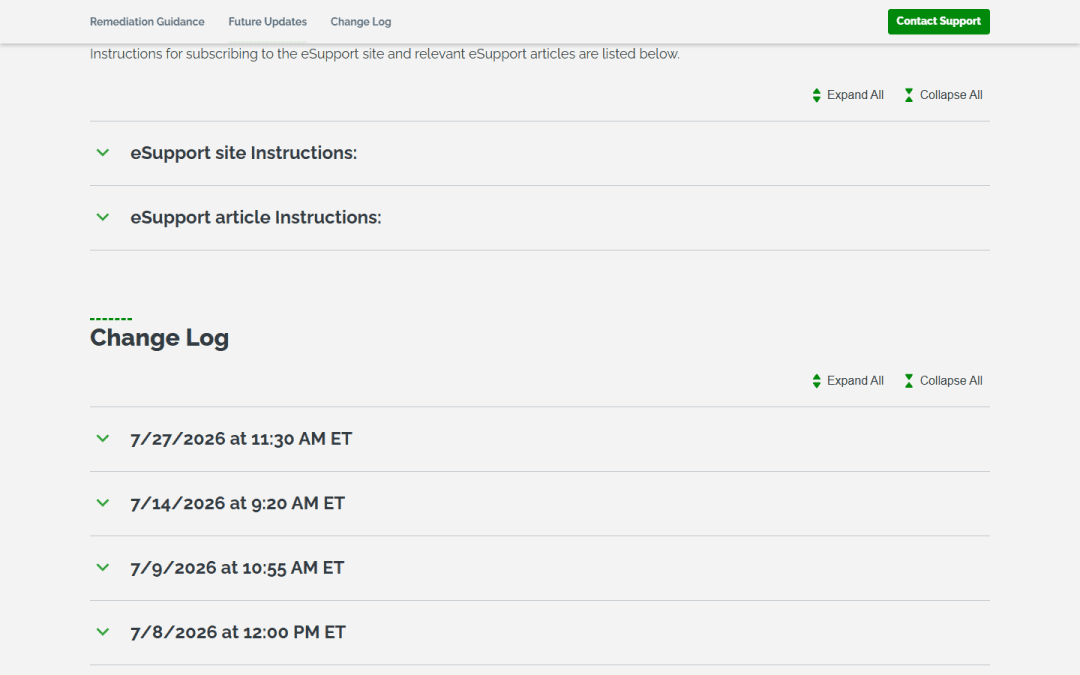
Figure | PTC Security Advisory Update Log Image Source: PTC
Information in R&D platforms is not as easy to judge in value as ordinary office documents. After actual data theft occurs, what enterprises often have to face is not just a technical incident, but also a chain reaction on product progress, supplier relationships, and market competition.
Patches must be applied, logs must be kept, and data access must be verified. Only by putting these things into the same chain can enterprises have a better chance to detect issues earlier when the next attack happens, and know earlier where the losses have stopped. Remember that your opponent could be AI, attempting 7*24, executing hour-level exploitation after finding vulnerabilities, data leakage, and encryption ransom. If you cannot fight speed with speed, you will only be left defenseless.


