AI Security and Intelligent Operations
The 'Tested Means Safe' Trap: Have You Fallen for It?

A Default Assumption Rarely Questioned
There is a default assumption in the security industry that is rarely questioned: defence is "effective once tested".
Annual red-blue teaming, penetration testing, and offensive-defensive drills are essentially scoring the defence system. If the score passes, everyone assumes the defence line will hold firm for the coming year; if vulnerabilities emerge, they patch them up and test again next year.
This logic roughly held true in an era when "devices were static and threats were stable". Today, however, it is failing simultaneously on three fronts.
Configurations change: a single policy adjustment, a rule update, or the onboarding of a new device can quietly render previous hardening invalid;
Threats change: attack techniques evolve, and last quarter's attack chain may no longer be today's most dangerous path;
Environments change: cloud, supply chains, and AI tools constantly penetrate business operations, expanding the attack surface daily; old maps can no longer chart new territories.
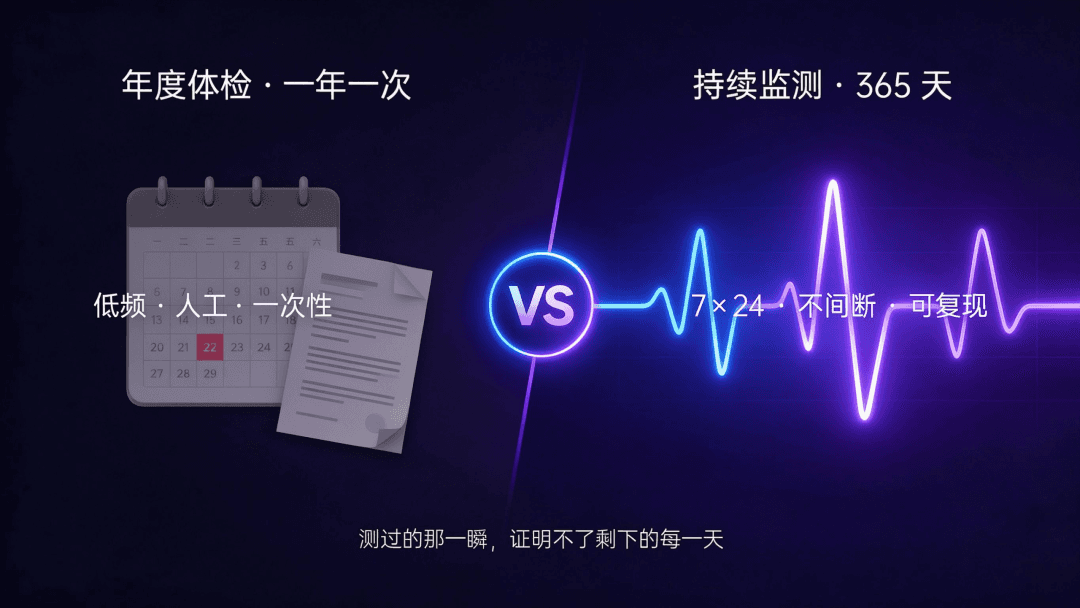
In other words, security defence resembles the human body rather than an examination machine: it requires continuous health monitoring rather than an annual medical check-up report. Normal metrics on the day of the check-up do not guarantee that issues won't arise in the remaining 364 days.
This is precisely the problem Cyritex aims to solve—not aiming perpetually to build a cleverer attack tool, but turning the effectiveness of defence into a metric as continuous, reproducible, and measurable as business availability.
From "Annual Health Check" to "Wearable Continuous Monitoring"
To understand Cyritex's solution, one must first accept a fact: the essence of validation is not "proving we are stronger", but "knowing where we have grown weaker at any moment".
The flaw of traditional offensive-defensive drills lies in being low-frequency, manual, and one-off: build a cyber range, invite experts, run it for a few days, issue a report, and then return to routine. The problem is that the report's conclusions only hold true at the exact moment the report is completed.
This very "instantaneous nature" is what the "CyriBAS Cyritex Intelligent Security Validation Platform" seeks to transform.
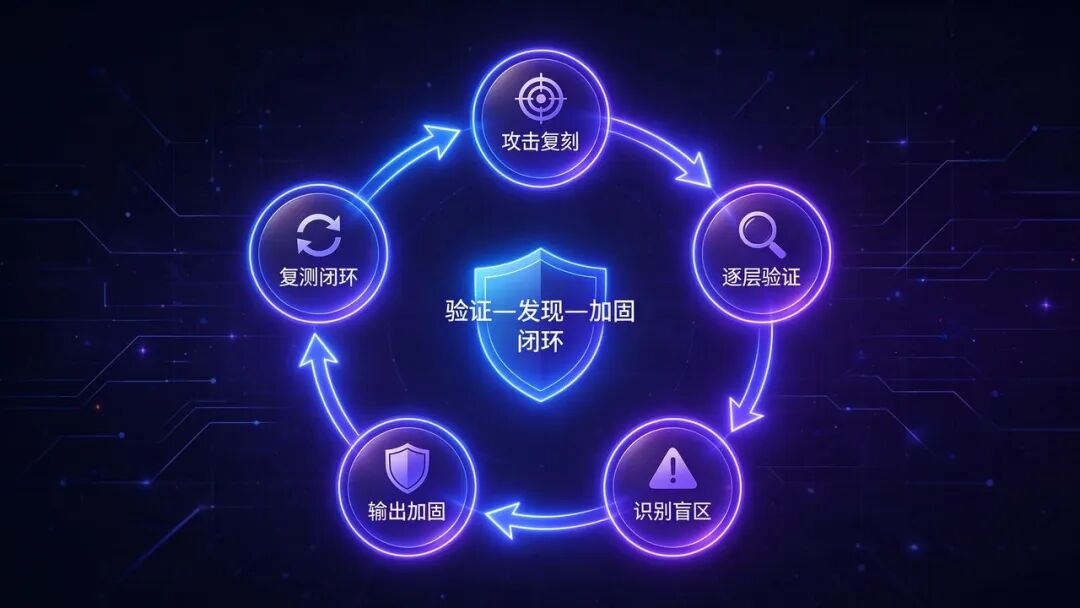
Based on an architecture of "Intelligent Brain + Validation Bot", it completely replicates attack chains realistically within environments close to real-world operations, without requiring dedicated cyber ranges;
Covers mainstream security products including NGFW, WAF, EDR, NDR, IPS, and email gateways, verifying layer by layer whether defences genuinely intercept attacks;
Automatically identifies defensive blind spots rather than leaving conclusions to expert visual assessment;
Directly outputs actionable hardening rules, turning each validation into an actual remediation;
Supports 24/7 routine self-testing at low cost, converting validation from an "annual ritual" into "daily operations".
In a nutshell, it transforms "testing once a year" into "continuous testing at all times", telling you every time: where points were lost, how to fix it, and whether the fix was effective.
Feasible Precisely Because It Does Not Provoke the Status Quo
Many "advanced" security products struggle to land not because they aren't good enough, but because they require enterprises to start from scratch: replacing platforms, altering workflows, and redoing data governance.
Cyritex chose the opposite path—overlaying on top of existing architectures:
Existing platforms continue to handle detection and response, while the validation system queries and triggers on demand without replacing established infrastructure;
Can start from a few high-value scenarios before gradually expanding scope;
Validation, re-checking, and remediation still operate within the enterprise's existing accountability framework and approval mechanisms.
Regarding the broader question of "AI for Security", Cyritex maintains an equally restrained stance.
Today, almost every vendor talks about large language models and intelligent agents. But when AI enters a security environment, the greatest risk is never "inaccurate answers", but "overstepping boundaries"—an unconstrained agent might execute actions in a customer's environment that it shouldn't execute.
"CyriAI Cyritex Intelligent Brain" is a pioneering production-grade AI security operations platform in China built on a Multi-Agent architecture, designed under the principle of "inherent governance":

AI behavioural boundaries are explicitly defined from the moment of deployment;
Any action requiring confirmation must be confirmed by the user before execution;
All operations are auditable and traceable throughout;
Natively adapted to private deployments and confidential compliance scenarios.
In short: it makes AI security operations "controllable, manageable, and traceable", rather than inviting a black box into the server room.
Many enterprises hesitate to adopt AI not because they worry it isn't smart enough, but because it cannot be trusted, audited, or confined within boundaries. What Cyritex does is turning this very "sense of boundaries" into a product capability.
How Expert Experience Becomes a Replicable Product
Offensive-defensive validation was once an "artisan" craft: which scenarios to test, what attack chains mirror real threats closest, how to prioritise detected blind spots, and how to write hardening rules all resided in experts' heads.
If this process had to be rewritten for every new client, the product would forever remain a people-dependent project incapable of scaling.
Cyritex continuously distils attack playbooks, tool invocations, judgment rules, and hardening knowledge into intelligence, Skills, and reusable validation capabilities—when onboarding a new client, all that truly needs adapting are data interfaces, asset structures, business baselines, and authorisation boundaries; the already refined capabilities can be reused across industries.
Because of this, it can serve diverse client profiles:
Finance: State-owned major banks and joint-stock commercial banks, focusing on regularized validation under massive attack surfaces, audit trails, and remediation boundaries;
Manufacturing: High-end manufacturing, focusing on continuous monitoring with limited security staff, as well as the actual impact of security incidents on production and core operations;
Healthcare & Pharmaceuticals: Focusing on measuring defence effectiveness under supply chain and compliance risks.

Though industries differ, the underlying problem remains the same: whether defences are effective is hard to measure continuously, validation relies on personal experience, and after device upgrades, there is no way to confirm whether previous hardening measures remain in effect.
Why Clients Are Willing to Pay: Because the Cost of "Testing Equals Trusting" Is Rising
For enterprises, choosing a validation product is essentially acknowledging one reality: the past practice of "testing and relaxing" has become increasingly unreliable.
Cyritex's clients span multiple industries including finance, manufacturing, and pharmaceuticals, with validation capabilities running continuously in real live environments rather than lingering at the proof-of-concept or testing stages.
Clients are not buying "a more formidable attack machine", but a new capacity for security operations: the validation system shoulders regularized offensive-defensive verification, the security team refocuses on real threats and remediation, and experts concentrate on complex scenarios and policy optimisation.
From Awards to Market Validation
Cyritex's industry recognition—being named a Gartner China Representative Vendor for Adversarial Exposure Validation (AEV), one of the Top 30 Rising Stars among China Cybersecurity Enterprises in 2025, winning 3rd prize in the Growth Enterprise Category at the 2025 "Cybersecurity Smart Valley" Innovation and Entrepreneurship Competition, being featured in AQ牛's "Breach and Attack Simulation (BAS) Application Guide (2025 Edition)", and repeatedly entering industry panoramas and offensive-defensive drill rankings—demonstrates that its technical roadmap is consistently acknowledged externally.
Yet for enterprise-grade products, awards are merely a mirror. Truly valuable validation occurs on client sites: whether they are willing to entrust their real defence systems to your continuous validation.
From winning consecutive awards to cross-industry implementations, Cyritex has actually walked a very pragmatic path: first clarify where "testing equals trusting" fails, then transform "continuous validation" from a concept into an operational, auditable, and replicable capability, and ultimately keep it running long-term in clients' production environments.
Conclusion
The security industry never lacks cleverer attack tools; what it might lack is a bit of honesty regarding defence—admitting that "the moment it was tested" cannot prove "every remaining day".
The real dividing line lies not in whose tool is sharper, but in who is willing to treat defence effectiveness as something requiring continuous measurement, continuous hardening, and continuous accountability.


