Security Verification and Offensive-Defensive Practice
Case Study Sharing | How do banks build a dynamic closed-loop security protection system? Cyritex shows you how

Against the backdrop of accelerated digital transformation in the financial business, a state-owned bank's traditional security protection system faced increasing difficulty in responding to new types of threats and challenges. By introducing the SecOps security effectiveness validation solution, the bank built a dynamic closed-loop system covering "Risk Identification – Real-world Validation – Continuous Optimisation", achieving a systematic improvement in security protection capabilities. ▌Three Core Security Challenges in Digital Transformation As a large financial transaction institution, the network security threats faced by this bank present significant features of technical upgrades. APT attacks lurk for a long time through phishing emails and supply chain vulnerabilities (such as the SolarWinds incident), and the application of large AI models has also spawned variant attacks and prompt injection risks of the models themselves, leading to a gradual decline in the effectiveness of traditional signature-based defences. These attacks are continuous, stealthy, and rapidly iterative, posing a severe test to real-time detection capabilities. The high-frequency iteration of business systems leads to lagging security policies, resulting in issues such as redundant access control, blind spots in protection, and lagging matching between policies and scenarios. The traditional manual auditing model can no longer meet the needs of normalised validation, and an automated assessment mechanism is urgently needed to ensure that defence capabilities evolve in sync with business. The 7×24-hour financial service requires security validation to strictly adhere to the principle of "zero business interruption", requiring a precise balance between risk troubleshooting and transaction continuity, which poses extremely high requirements on the harmless design and risk controllability of the validation scheme. ▌SecOps Dynamic Closed-loop System: Full-process Security Validation Architecture To address the above challenges, the bank constructed a three-dimensional protection system of "Basic Validation – Deep Assessment – Continuous Optimisation" based on the SecOps Security Metric Validation Platform:

1. Basic Defence System Integrity Validation Conduct multi-dimensional validation of security products in core areas such as firewalls, WAFs, and email gateways:
Configuration Compliance Check: Use automated tools to detect log integrity and timestamp consistency to ensure that the initial configuration of security products meets the security baseline, eliminating configuration vulnerabilities.
Real-world Attack Simulation: Use the OWASP Top 10 model to test Web applications; customize phishing email samples to test the interception capabilities of email gateways, and use the Metasploit framework to restore the propagation path of ransomware. For example, in the email gateway test, 12 types of phishing scenario simulations achieved a 99.2% interception rate and
2. Real-world Assessment of Deep Protection Capabilities Conduct special validation for advanced threats:
APT Ransomware Confrontation: Forge legitimate traffic to construct covert channels, testing the intrusion detection system's capability to capture low-frequency attacks; run ransomware variants realistically in a sandbox environment to validate the real-time blocking effect of endpoint protection systems.
AI Large Model Security Validation: Simulate prompt injection attacks to validate perimeter defences, and monitor model output through compliance rules to prevent decision-making risks caused by data poisoning.
Full-link Vulnerability Analysis: Correlate and analyse attack logs and alert information, and apply machine learning to identify weak defence links, such as discovering incomplete coverage of XSS protection rules in a branch, precisely positioning the direction for optimisation.
3. Continuous Validation and Closed-loop Management
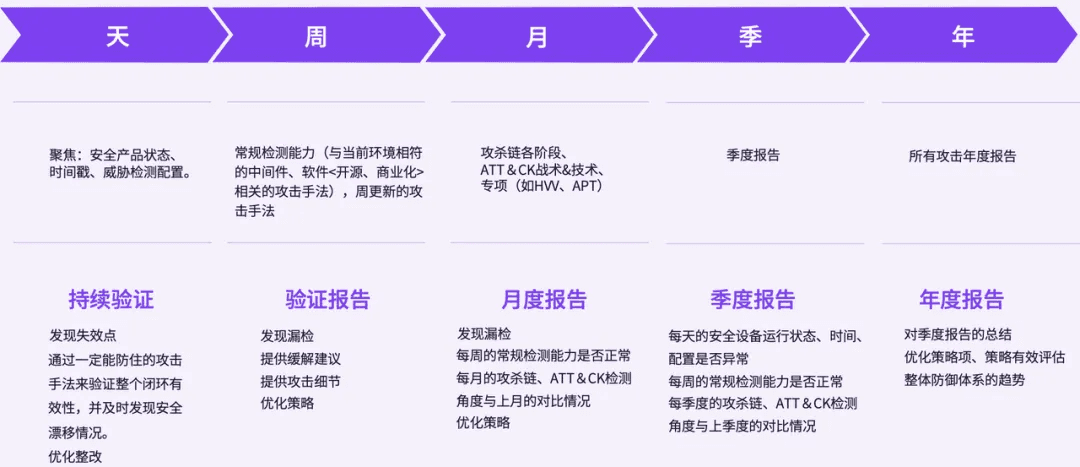
Each validation generates a detailed report including risk levels and remediation recommendations, forming a "Validation – Remediation – Retesting" closed loop. Establish a normalised validation mechanism, executing basic inspections daily and conducting deep threat simulations weekly to prevent "security drift". 4. Harmless Validation Design Guarantees Business Continuity Ensure zero-risk validation through a three-layer isolation mechanism:
Physical Layer: Run malicious samples in an independent sandbox to avoid damage to the production environment;
Communication Layer: Validation agents communicate only with the encrypted security brain;
Operation Layer: Automated phishing email testing eliminates the risk of manual accidental touch.
▌Real-world Effectiveness: Multi-dimensional Improvement of Security Efficiency After half a year of implementation, the bank's security protection system achieved key improvements:
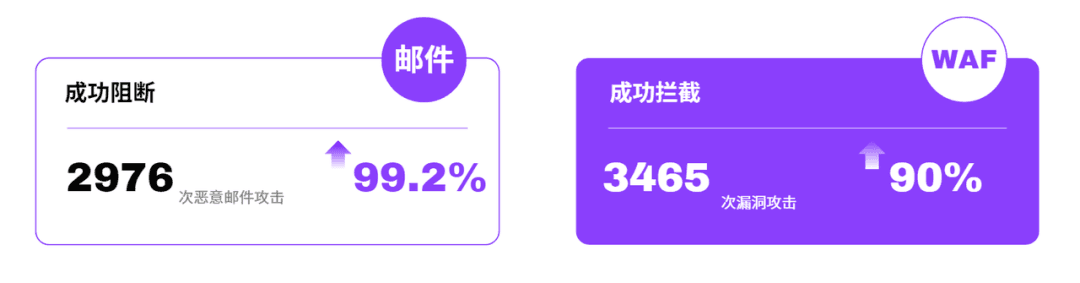
1. Boundary Device Protection Rate Significantly Enhanced
Email Gateway: Phishing email interception rate reached 99.2%, and the risk of employee information leakage decreased by 87%;
Boundary WAF: OWASP Top 10 vulnerability interception rate increased to 90%, SQL injection false positive rate dropped to 0.3%, and deserialisation attack detection accuracy reached 88.4%.
2. Transformation of Security Operation Model The visualised risk heatmap has improved the decision-making efficiency of the management team. Basic validation has eliminated the problem of security products "running with diseases", deep validation has identified 3 unknown APT attacks in advance, and continuous validation has fixed 17 policy mismatch issues, achieving a shift from reactive response to proactive defence. 3. Dual-wheel Drive of Business and Security During the validation period, core transaction systems remained 100% available, with zero interruption to services such as fund clearing and account enquiries, achieving a dynamic balance between security protection and business development. ▌Future Plans: Building a Full-scenario Security Protection Matrix The bank and SecOps plan to deepen cooperation in three aspects:
Specialised Capability Expansion: Conduct special validations for NTA, EDR, and HIPS, covering scenarios such as malicious traffic blocking, sensitive data tracking, and container security isolation;
Threat Hunting Upgrade: Simulate APT attack chains based on the ATT&CK framework, and integrate threat intelligence to improve the detection capability of lurking threats;
Intelligent Integration: Explore AI threat prediction and behaviour analysis, and construct dynamic risk assessment models to achieve early warning of new attacks.
▌SecOps Security Metric Validation Platform Provides You With:
As a service provider focusing on enterprise-grade security validation, SecOps always firmly believes that: the true value of security lies in making business operations under complex architectures "as stable as Mount Tai". From single-point detection to systematic defence, your enterprise may just need a security defence effectiveness validation.
Attack Simulation Capability: Attack simulation across the entire kill chain, covering reconnaissance, weaponisation, delivery, exploitation, and other phases of attack behaviour, restoring real-world APT attack scenarios.
Flexible Validation Mode: Supports scenario-based one-click validation (predefined industry scenarios such as ransomware, healthcare industry attacks, etc.) and custom validation, allowing the orchestration of attack playbook sequences to simulate specific threat group methodologies or malware variants.
Convenient Deployment and Management: Adopts the "Security Validation Brain + Agent" architecture, supporting SaaS and on-premises deployment, simplifying the deployment process and supporting multi-region agent collaboration.
Professional Mitigation Recommendations: Based on validation results, provides configuration optimisation recommendations tailored to specific security products (such as NGFW, WAF) or vendors to resolve defence shortcomings.
Scientific Framework Classification: Classifies attack scenarios based on frameworks such as MITRE ATT&CK and Cyber Kill Chain, supporting the filtering of attack methodologies by security dimension (network, endpoint, email, etc.) or framework dimension.
Data Visualisation: Provides rich visual charts (such as security scores, validation action status ratio, defence capability trends) to help personnel at all levels understand the current security status.
Continuous Updates of Rule Library: Includes 20,000+ attack methodologies, 2,200+ attack scenarios, tracking 400+ APT groups and 200+ ransomware groups.
SecOps Security Labs tracks internet vulnerabilities and hacker groups 7×24 hours, providing the latest threat intelligence at the first opportunity to ensure that the validation content is synchronised with cutting-edge attacks.
The practice of a certain bank shows that in the face of exponentially evolving network security threats, normalised real-world validation has become the core paradigm of security protection. SecOps' security effectiveness validation solution helps financial institutions establish quantifiable and evolvable security systems, building a dynamic defensive barrier for business digital transformation.


