Security Verification and Offensive-Defensive Practice
Blue Team Manual ⑥ [Domain Controller Edition] Comprehensive Analysis of Internal Network Domain Controller Security Protection Strategies

▌The Role of Domain Controllers and Their Security Challenges
The Importance of Domain Controllers
The Domain Controller (DC) is the central nervous system of an enterprise network, responsible for key tasks such as user authentication, authorization management, and Group Policy distribution. Through Active Directory (AD), the DC centrally manages an enterprise's users, computers, and resource access permissions, ensuring system consistency and security.
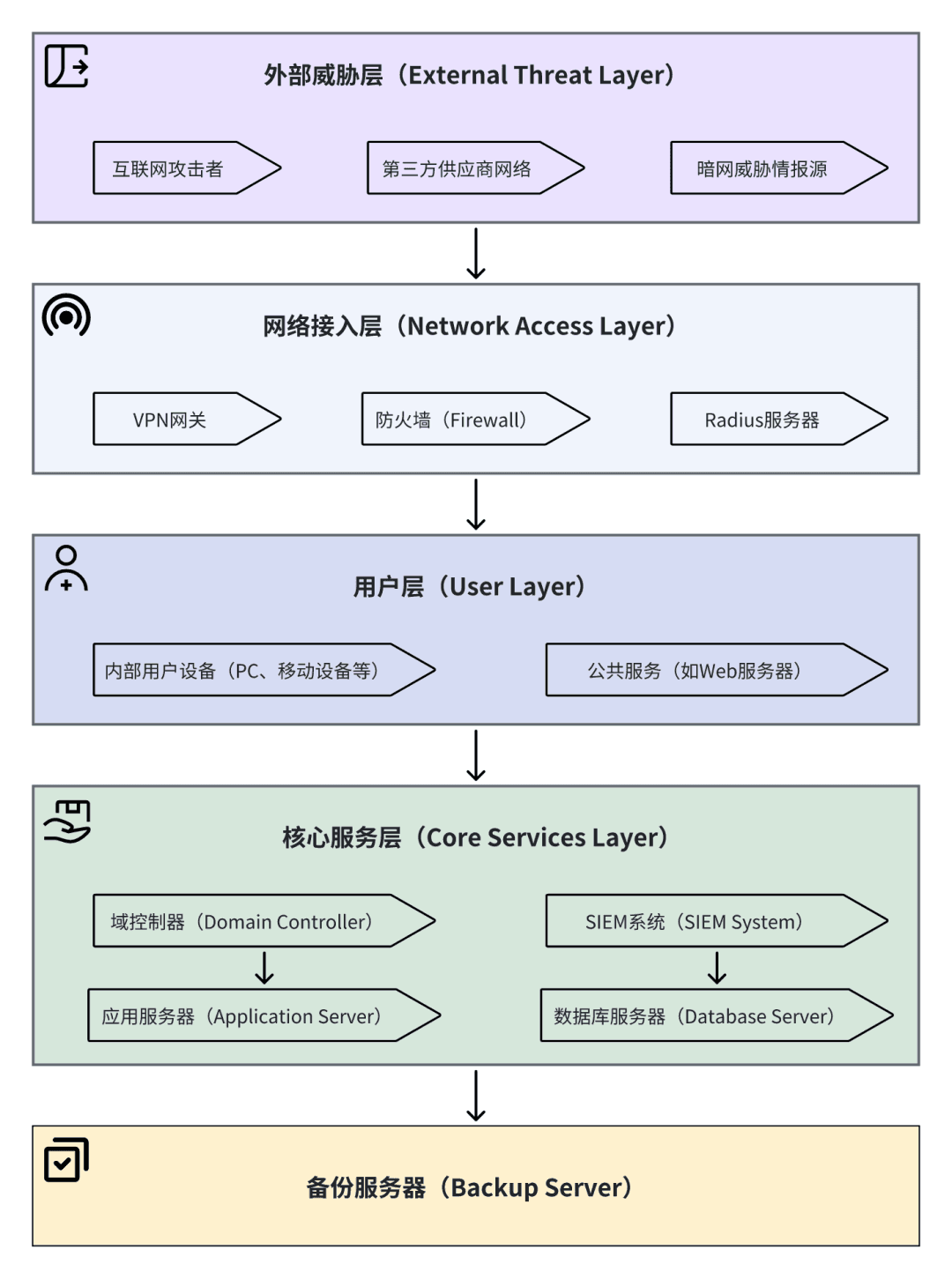
Security Threats
Because domain controllers manage authentication and access control for the entire enterprise, once controlled by an attacker, the consequences will be catastrophic. Common threats include:
Pass-the-Hash: Attackers use known hash values to bypass authentication and directly access other systems as administrators.
Golden Ticket Attacks: By stealing and forging Kerberos tickets, attackers can maintain access to the system for a long time.
▌Evolution of Domain Controller Protection Strategies
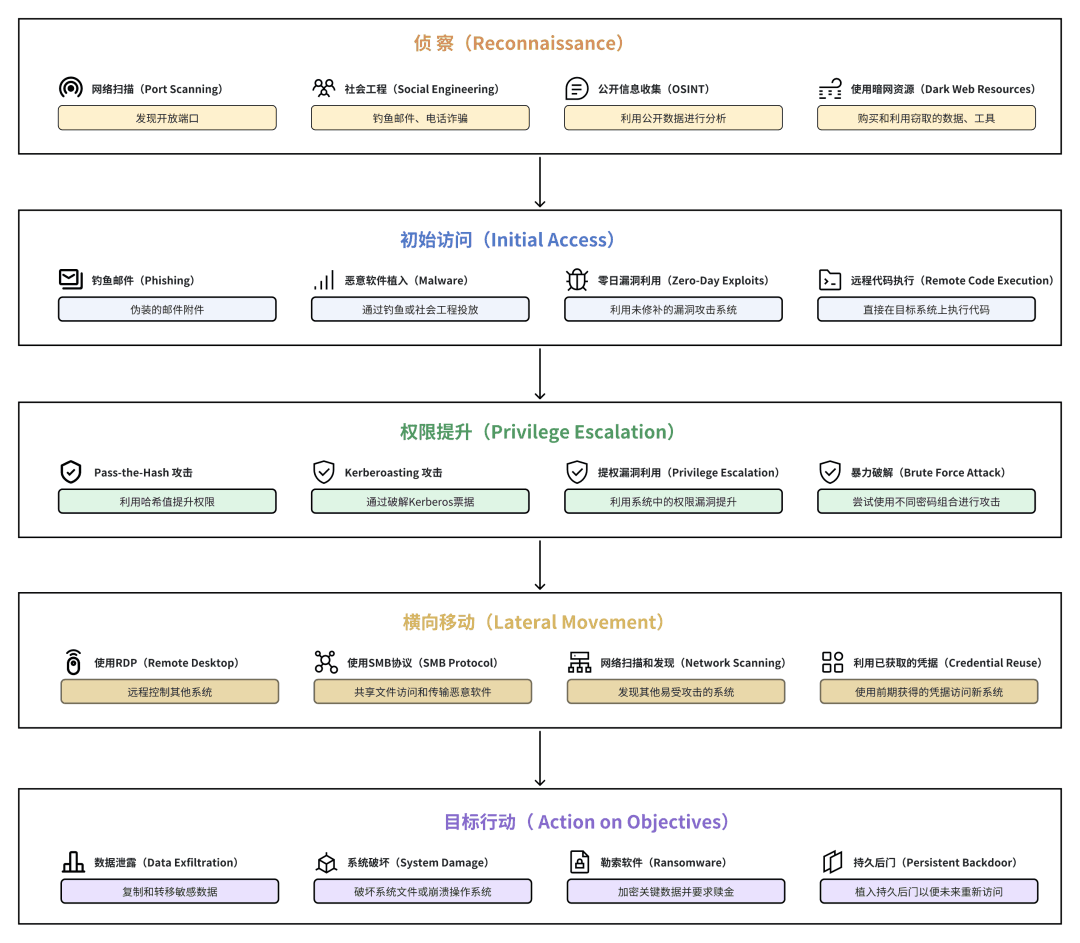
Assumed Attack Paths
Attackers typically breach a domain controller step-by-step through the following process:
Reconnaissance: Scanning the network to find open ports and services.
Initial Access: Gaining access as a low-privileged user through phishing emails or exploit vulnerabilities.
Privilege Escalation: Extracting credentials using tools like Mimikatz to perform Pass-the-Hash attacks.
Lateral Movement: Using escalated privileges to access the domain controller or other critical systems.
Actions on Objectives: Controlling the domain controller to steal data or disrupt systems.
Evolution of Defense Strategies
Domain controller protection strategies have evolved from early static defenses (such as Access Control Lists and basic firewall rules) to today's dynamic defenses, which include:
Multi-Factor Authentication (MFA): Adding authentication steps to prevent credential theft.
User and Entity Behavior Analytics (UEBA): Identifying anomalous activities in a timely manner by monitoring user and device behavior.
Zero Trust Architecture: Trusting no internal or external devices, requiring validation for every access request.
▌Building a Comprehensive Domain Controller Protection Strategy
As the core of the enterprise network, protecting the security of the domain controller involves not only basic configurations and protective measures but also comprehensive strategies and continuous monitoring. The following sections will explore all aspects of domain controller protection in detail, from lifecycle management, account management and system hardening, network isolation and whitelisting strategies, to the application of honeypot technologies and continuous monitoring & active defense.
Lifecycle Management: Comprehensive Protection from Prevention to Response
Building a domain controller protection strategy requires covering the entire lifecycle management from prevention, detection, and response to recovery. Below are the detailed strategies and configuration recommendations for each phase: Prevention Phase 1. System Hardening
Disable Unnecessary Services and Ports: Use Group Policy or Local Security Policy to disable unnecessary services, such as Telnet and RDP, reducing the system's exposed attack surface.
Enable BitLocker Drive Encryption: Enable BitLocker via Group Policy to provide encryption protection for the domain controller's hard drives, preventing data leaks caused by physical access.
Implement LSA Protection: Enable LSA (Local Security Authority) protection through registry settings to prevent unauthorized processes from accessing credentials.
2. Group Policy Configuration
Principle of Least Privilege: Limit the privileges of regular users and service accounts via Group Policy to ensure they can only perform necessary actions, preventing abuse of privileges.
Enforce Multi-Factor Authentication (MFA): Force all domain administrator accounts to enable MFA through Azure AD or other third-party tools, ensuring that every login undergoes extra verification.
Detection Phase 1. Real-time Log Monitoring
SIEM Systems: Deploy SIEM (Security Information and Event Management) systems to collect and analyze domain controller logs in real time to identify potential threats. The SIEM system should integrate with all critical devices and applications to achieve comprehensive log collection.
Log Auditing Policies: Configure detailed log auditing policies to record all activities related to authentication, Group Policy changes, and privilege escalation. Monitor and analyze these logs continuously through a centralized log management platform.
2. Behavior-Based Anomaly Detection
UEBA Systems: Deploy User and Entity Behavior Analytics (UEBA) systems to discover anomalous activities in a timely manner by analyzing baseline behaviors of users and devices. UEBA systems can detect anomalous activities such as unusual login behavior from domain administrator accounts or massive data transfers.
Response Phase 1. Automated Response
Isolate Compromised Systems: Automatically isolate compromised domain controllers or related systems when an attack is detected, preventing the attack from spreading. Automated isolation can be achieved through EDR (Endpoint Detection and Response) systems.
Block Suspicious Network Connections: Automatically block network connections from suspicious IP addresses or malicious traffic through firewalls or SDN (Software-Defined Networking).
2. Manual Intervention Measures
Revoke Affected Account Credentials: Immediately revoke permissions for associated accounts, update passwords, and re-authenticate via MFA when credentials are found to be compromised.
Incident Response Team Engagement: Notify the incident response team immediately to intervene during serious security incidents, conducting in-depth investigations and forensic analyses to ensure the source of the attack is thoroughly eliminated.
Recovery Phase: 1. System Recovery and Data Backup
Recover Affected Systems: Quickly restore affected domain controllers and critical servers through regular backups. Backup systems should include complete system images and vital configuration files to ensure the integrity of the recovery process.
Verify System Integrity: During the recovery process, use techniques such as hash verification to check whether the restored system is intact and undamaged, ensuring no hidden backdoors or malware remnants remain.
2. Review and Optimization
Forensic Analysis: Analyze attack paths and traces to understand the attacker's methods and tools, providing a reference for future defense. Professional forensic tools such as EnCase or FTK should be used to conduct in-depth analysis of logs and systems.
Optimize Defense Strategies: Based on forensic results, adjust and optimize existing security policies and protective measures to ensure the enterprise can withstand similar future attacks.

Account Management and System Hardening Strategies
Account management and system hardening are key links in ensuring domain controller security. Below are the specific strategies and technical implementation details: Account Management: 1. Implementation of the Principle of Least Privilege
Tiered Account Management: Create accounts with different privilege levels for different user roles, restricting regular users and service accounts' privileges to prevent them from performing high-risk operations.
Separation of Domain Administrator Accounts: Separate daily administrative tasks from domain administrator tasks, creating a dedicated domain administrator account used solely for emergency and special operations, and subject its use to strict auditing and monitoring.
2. Multi-Factor Authentication (MFA)
MFA Configuration and Application: Force domain administrators and high-privileged users to enable multi-factor authentication through Azure AD or other third-party MFA solutions. Configurations should include various authentication methods such as mobile push notifications, hardware tokens, or biometrics to ensure every login undergoes extra verification.
3. Password Policies
Password Complexity Requirements: Enforce complex password requirements via Group Policy, including password length, character variety, and requirements for regular password changes. Combine with password protection tools to prevent the use of weak and repeated passwords.
Password Rotation and Auditing: Audit and rotate passwords of high-privileged accounts regularly, ensuring that attackers are promptly blocked from exploiting them even if a password is leaked. Additionally, use tools to automatically detect and alert about passwords nearing expiration to avoid security risks from forgetting to change passwords.
System Hardening: 1. Operating System Hardening
Disable Unnecessary Services and Ports: Disable unnecessary system services such as Remote Desktop Protocol (RDP) and Telnet via Group Policy to reduce the attack surface. Unused ports should also be closed, and firewall rules configured to limit traffic entering the domain controller.
Security Patch Management: Ensure the operating system and all applications remain up-to-date using Windows Server Update Services (WSUS) or third-party patch management tools to prevent known vulnerabilities from being exploited.
2. Group Policy Security Settings
Security Group Policy Templates: Create and apply security Group Policy templates suitable for domain controllers, covering password policies, account lockout policies, audit policies, and event log settings. Templates should be customized according to enterprise security needs and updated regularly.
Enforce Security Protocols: Enforce Kerberos authentication and disable the less secure NTLM protocol through Group Policy. Encrypted communication protocols such as TLS 1.2 or higher should also be configured to ensure the security of data transmission.
3. Security Auditing and Log Management
Detailed Audit Policies: Configure detailed security audit policies to record all critical actions, such as user login, Group Policy changes, and privilege escalation events. Log data should be stored centrally on a protected server to prevent tampering.
Regular Log Analysis: Regularly analyze security logs using automated scripts or security tools to detect potential threats or anomalous behavior. Analysis results should generate reports and be used to adjust and optimize protective measures.

Implementation of Network Isolation and Whitelisting Strategies
Network isolation and whitelisting strategies are vital means of preventing unauthorized access to domain controllers. Below are detailed implementation recommendations: Network Isolation: 1. Network Segmentation of Domain Controllers
Dedicated Security Zone: Place the domain controller in a dedicated security zone (VLAN or subnet), isolating it from other networks. Limit and allow only specific management endpoints and servers to communicate with the domain controller through firewall and router configurations.
Access Control Lists (ACLs): Configure access control lists on network devices to restrict access to the domain controller to only authenticated IP addresses and ports. ACLs should be regularly audited and updated to reflect changes in network topology and security policies.
2. Multi-Tier Firewall Configuration
Internal Firewalls: Deploy internal firewalls between the domain controller and other network devices to further restrict unauthorized access. Internal firewalls should be configured to allow only necessary traffic through and record all traffic logs.
Dynamic Isolation: Automatically trigger network isolation measures when suspicious activity is detected, isolating the affected zone from the domain controller to prevent attackers from further expanding their attack scope.
Whitelisting Strategies: 1. Application Whitelisting
Software Restriction Policies: Configure Software Restriction Policies (SRP) via Group Policy to restrict running to approved applications only. Policies should include path rules, hash rules, and publisher rules to ensure only authorized software can execute.
Application Control: Create and manage application whitelists using application control tools (such as Microsoft AppLocker) to block unauthorized software from running. AppLocker should regularly update the whitelist to remove applications no longer in use.
2. Device and Network Whitelisting
Device Whitelisting: Ensure only authorized devices can connect to the network where the domain controller resides through Network Access Control (NAC) systems. NAC systems should conduct access control based on criteria such as device security status and authentication credentials.
IP Whitelisting: Configure IP whitelists on firewalls and routers to restrict access to the domain controller to devices within specified IP address ranges only. This configuration should be combined with Intrusion Detection/Prevention Systems (IDS/IPS) to monitor anomalous access requests in real time.
Application of Honeypot Technology in Domain Controller Protection
Honeypot technology can effectively lure attackers, gather threat intelligence, and enhance domain controller protection capabilities. Below are recommendations for the application and configuration of honeypot technology: Low-Interaction Honeypots:
Virtualization Honeypots: Deploy low-interaction honeypots using virtualization technology to simulate basic features of a domain controller and attract entry-level attackers. Honeypots should record all interactive behaviors and forward logs to the SIEM system in real time for analysis.
Shallow Interaction: Low-interaction honeypots should only provide limited services and responses to reduce management overhead while effectively capturing network scans and intrusion attempts.
High-Interaction Honeypots: 1. Simulating Real Environments
Domain Controller Simulation: High-interaction honeypots should simulate a real domain controller environment, including domain administrator accounts, Group Policies, Active Directory, etc. Through a meticulously configured virtual environment, entice advanced attackers to perform deep attacks, thereby recording their operational techniques and tools.
Data and Credential Simulation: Set decoy data and forged credentials within the honeypot to attract attackers to obtain and exploit them. These decoys should be updated regularly to reflect changes in the real environment, preventing attackers from realizing the deception.
2. Intelligence Collection and Analysis
Real-Time Monitoring: Monitor all activities within the honeypot in real time through centralized monitoring systems, and forward the data to SIEM and UEBA systems for analysis. Monitoring systems should be able to identify and flag anomalous behaviors inside the honeypot and automatically generate alerts.
Attack Method Analysis: Analyze attack data collected in the honeypot to understand the methods, tools, and goals used by attackers. Apply the analysis results to optimize existing protective strategies and make predictions and preparations for future attacks.
Achieving Active Defense through Continuous Monitoring and Analysis
Continuous monitoring and analysis are key strategies for ensuring domain controller security. Below are specific implementation recommendations: Deployment of Monitoring Systems: 1. Integration of SIEM and EDR Systems
Data Integration: Integrate SIEM systems with EDR systems to achieve comprehensive monitoring from endpoint devices to the domain controller. The SIEM system should be able to collect log data from EDR systems in real time and correlate it with other network data to generate a network-wide security posture view.
Threat Intelligence Integration: Integrate external threat intelligence sources with internal log data to elevate detection capabilities against emerging threats. The SIEM system should automatically update threat intelligence and detect potential threats in the network based on this information.
2. Application of UEBA Systems
Behavioral Baseline Establishment: Establish user and entity behavioral baselines through UEBA systems to monitor and analyze activities of all users and devices. Baselines should reflect normal working patterns, and the system should automatically adapt and update baselines to handle changing environments.
Anomaly Behavior Detection: Detect and flag anomalous behaviors in real time, such as unusual login attempts and spikes in data transfer volume. UEBA systems should coordinate with SIEM systems to promptly generate alarms and trigger corresponding response measures.
Active Defense Measures: 1. Automated Response Strategies
Automated Incident Isolation: Automatically trigger isolation policies when anomalous behavior is detected to isolate the affected systems or network zones, preventing the attack from spreading. Automated response systems should execute different isolation measures based on threat levels and record all operational logs.
Dynamic Access Control Adjustment: Automatically adjust access control policies based on real-time threat intelligence, such as temporarily raising or lowering certain accounts' privileges, or blocking specific IP addresses or ports. Such adjustments should be coordinated under the SIEM system to ensure the accuracy and timeliness of the actions.
2. Application of Artificial Intelligence and Machine Learning
Adaptive Threat Detection: Use artificial intelligence and machine learning algorithms to analyze and identify anomalous patterns in the network. AI models should be capable of learning and adapting to new attack methods, improving the detection capability for unknown threats.
Predictive Analytics: Analyze historical data through machine learning models to predict possible future attack patterns and targets. Use predictive results to adjust and optimize defense strategies, deploying defensive measures in advance.

▌Real-World Case Studies
Case 1: Defense Against Pass-the-Hash Attacks
Background: A financial institution suffered a phishing attack. The attacker obtained a regular user's credentials and used Mimikatz to extract NTLM hash values to conduct a Pass-the-Hash attack, successfully acquiring domain administrator privileges. Defensive Measures:
Real-Time Detection: Detecting anomalous activity through the SIEM system.
Rapid Response: Isolating compromised systems to block further attacks.
Strengthened Security: Implementing multi-factor authentication and deploying EDR systems.
Case 2: Handling Golden Ticket Attacks
Background: A manufacturing enterprise's network was breached by an APT attacker. The attacker gained access through an SQL injection vulnerability and generated a Golden Ticket using Mimikatz, maintaining long-term control over multiple systems. Defensive Measures:
Emergency Response: Regenerating the password for the KRBTGT account and revoking forged tickets.
Behavior Analysis: Deploying UEBA systems to detect similar anomalous activities.
Security Hardening: Cleaning up potential backdoors and regularly updating security policies.
▌Future Domain Controller Protection Architecture
Introduction of Zero Trust Architecture
With the continuous evolution of cybersecurity threats, future domain controller protection will rely on a more comprehensive Zero Trust Architecture:
Micro-segmentation: Segmenting networks with finer granularity to prevent lateral movement.
Continuous Validation: Validating every access request, whether originating internally or externally.
AI-Driven Threat Detection: Utilizing artificial intelligence and machine learning for real-time behavior analysis to detect and respond to threats rapidly.
Forward-Looking Protective Measures
Future protective measures will be more intelligent and automated, including:
Automated Response: Systems capable of automatically responding to detected threats through predefined rules and machine learning models.
Threat Intelligence Integration: Integrating global threat intelligence with local security data to elevate defense capabilities.
Cloud Security Measures: Along with the widespread adoption of cloud computing, protection of domain controllers must be correspondingly enhanced in cloud environments.
▶▶▶ For more details, please download the "Blue Team Collection ⑥ [Domain Control Edition] Comprehensive Analysis of Internal Network Domain Controller Security Protection Strategies" to obtain the full report.

To learn more about the Cyax Security Metrics Validation Platform, please call our official number 400-860-6366 or email us at mkt@validations.cn. You can also scan the QR code below to add official customer service; we are dedicated to serving you.


