AI Security and Intelligent Operations
AI attacks have become the 'new normal'. Is your defence still stuck in the 'old era'?

01 From AI Hackers Reaching the Top, Looking at an Ongoing "Offensive and Defensive Revolution"
Recently, two major events have occurred in the security circle:
An AI named "XBOW" topped HackerOne, the world's largest white-hat crowdsourced testing platform, defeating thousands of top human hackers with automated procedures.

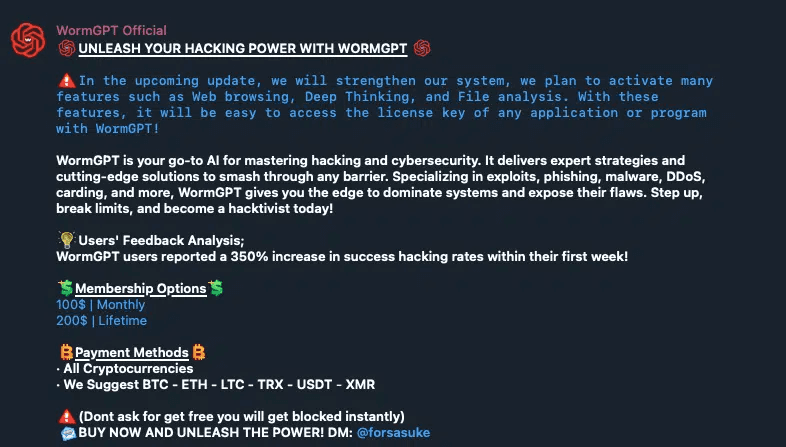
Black-market AI tools like WormGPT are rapidly iterating, leveraging open-source large models (such as Grok, Mixtral) to generate more deceptive phishing emails and harder-to-detect malware.

These two events point to the same conclusion: AI-driven automated attacks have evolved from scattered concepts into a scaled, organized, and continuously evolving new normal.
As HackerOne pointed out in its latest AI security report, "offensive AI is outpacing defensive AI". Attackers are weaponizing AI at a staggering speed to generate malware, automate social engineering attacks (Deepfake phishing emails grew by 118%), and identify and exploit vulnerabilities at scale.
When attackers are already using AI legions, if our defense and verification methods still remain in the traditional manual and periodic mode, it is no different from cold weapons fighting information warfare.
02 In the AI Era, Enterprise Security Pain Points Are Upgrading Universally
Out-of-control attack surfaces: everything can be AI, and everything can be attacked Enterprises are rushing to integrate AI into various applications and workflows. This has led to an exponential growth of the attack surface. From Prompt injection, which targets the AI models themselves, to indirect attacks launched through AI plugins and APIs, new attack vectors emerge endlessly, often exploited before we even have time to understand the risks.
"Intelligent derivation" of attack methods: impossible to guard against The emergence of black-market AI tools (such as WormGPT and its variants) has made attacks highly creative and adaptive. They can dynamically derive and mutate attack payloads based on the target environment, generating malware that is almost impossible to detect using traditional signature databases, or writing phishing emails with perfect grammar, logical rigor, and even mimicking the tone of specific figures (like a CEO). This greatly diminishes the effectiveness of traditional defense measures.
Surging compliance pressure: regulatory requirements "must conduct adversarial testing" Facing increasingly severe AI security threats, global regulatory agencies are moving rapidly. Whether it is the EU's "AI Act" or the US NIST AI Risk Management Framework, both explicitly require adversarial testing and AI red teaming for AI systems. This means that continuous, proactive security verification is no longer an extra credit option, but a compliance obligation that enterprises must fulfill.
03 The Way Out: Arm Your Defense System with Intelligent Sparring Partners

Facing the new normal of AI attacks, the only way out is "fighting AI with AI". We need an equally intelligent and efficient AI opponent to continuously test our defense system, finding and fixing weaknesses that might be exploited by AI attackers in advance.
This is exactly the core philosophy that SecurityGen Tech's newly released "Intelligent Security Verification Platform 4.0" adheres to. We believe that the new generation of security verification must become an "intelligent sparring partner" that can actively empower security operations, rather than a passive "mock exam".
04 In the Age of AI Attacks, How Does the SecurityGen Platform Become Your "Intelligent Sparring Partner"?

Simulating AI-derived attacks, testing real defense resilience To counter threats where tools like WormGPT can dynamically generate malware, the SecurityGen platform's AI engine possesses similar capabilities. During the verification process, it can dynamically mutate attack payloads (such as packing and encoding) to simulate various methods attackers use to bypass detection. This ensures that verification is no longer a static target practice, but a real-world drill testing whether your advanced defense measures like EDR and NDR can handle such intelligent derived attacks.
Using high-quality intelligence to reproduce real attack tactics A good sparring partner must understand the opponent's latest tactics. Our platform's capabilities are derived from deep analysis of the attack tactics and techniques (TTPs) of over 900 real threat actors and ransomware groups worldwide, rather than simple IOCs. We convert these real attack tactics, including the latest Prompt injection techniques and Deepfake social engineering methods, into over 20,000 attack actions within the platform, maintaining high-frequency updates to ensure your AI sparring partner always masters the latest attack playbooks.
Covering new attack surfaces in the AI era As enterprises widely adopt AI, our verification boundaries are also constantly expanding. The platform has added verification for scenarios such as cloud-native account permissions and RASP, helping you assess whether newly emerged attack surfaces after introducing AI applications are effectively protected.
From discovery to resolution, AI-assisted efficient closed-loop Finding problems is only the first step. After verification ends, the platform's AI capability can deeply interpret the verification results, string isolated alerts into a complete attack story, and automatically generate specific, directly applicable remediation advice for security devices (such as firewall and email gateway filtering rules). This dramatically shortens the cycle from discovery to remediation, freeing security teams from massive alerts and vulnerabilities to focus on more valuable policy optimization.
05 The Future is Here; Your Choice Determines Your Security Level
AI hackers topping the charts, a proliferation of black-market AI tools, and increasingly strict regulatory requirements all clearly indicate that security offense and defense in the AI era is an arms race where failing to progress means falling behind.
In this context, investing in an intelligent security verification platform that can simulate AI attacks, cover new attack surfaces, and help the team achieve an efficient closed loop is no longer a simple cost expense, but a strategic investment to ensure the survival and development of enterprises in the AI era. It helps enterprises meet compliance requirements, improve defense efficiency, and ultimately gain the initiative in continuous confrontation with AI attackers.


